|
Bucks Geology GroupLambeth Group
The Lambeth Group represents the first Cenozoic [Tertiary] sediments to be preserved in the geological record of Buckinghamshire. The unconformity between the Chalk and the Lambeth Group represents a significant time gap (approx 30 million years). The time gap includes the famous K/T boundary dated at 65.5Ma, the extinction of the dinosaurs, the ammonites, belemnites etc, and the evolution of many species with distinct similarities to modern living species. Evidence of uplift and erosion of the Chalk is furnished from the fact that the higher stages of the Chalk are missing in Buckinghamshire and pebble beds of rolled flint, with derived chalk fossils, are preserved in the overlying beds.
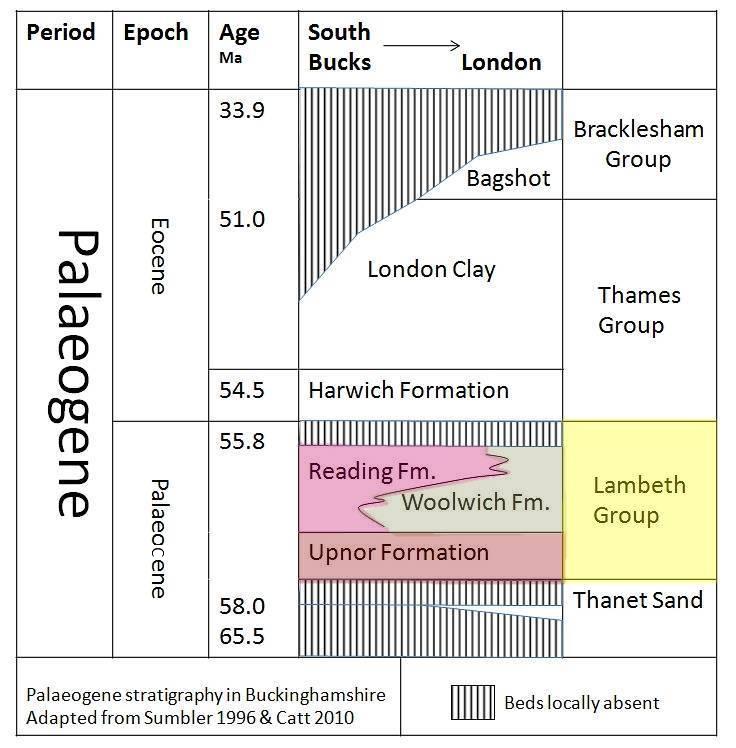
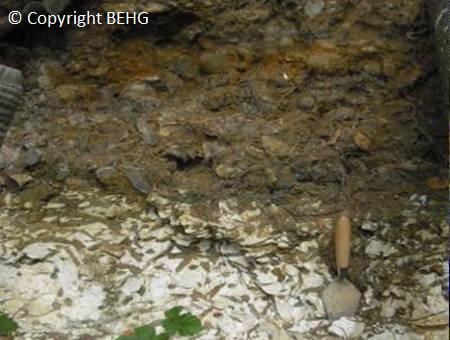
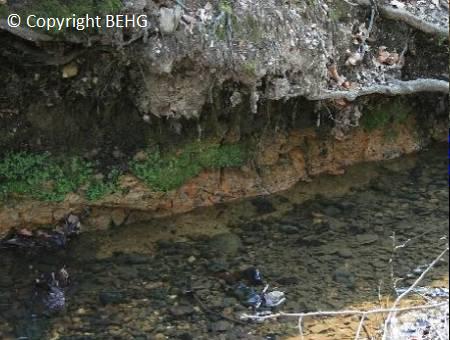
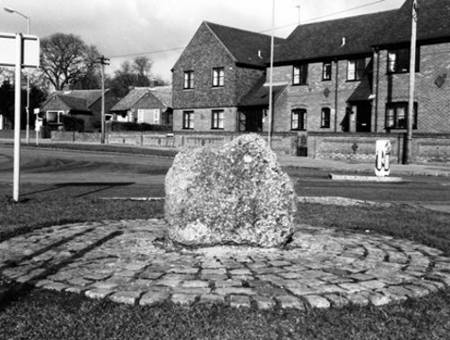
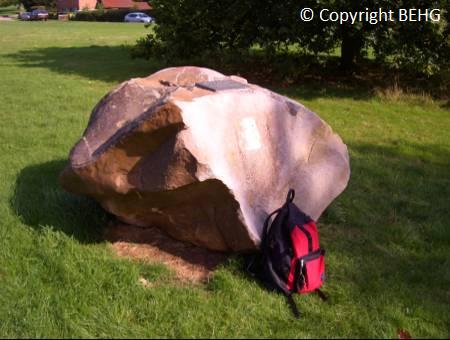
The Lambeth Group Stratigraphy The Upnor Formation represents the lowest part of the Lambeth Group and the oldest deposits to be preserved above the Chalk in south Buckinghamshire. To the east under parts of London the Thanet sands occur directly on the Chalk, but these are absent to the west. At the base of the Upnor Formation there is often a layer containing unworn green-coated flints. Evidence of burrowing into the chalk by crustaceans is also seen at Harefield, Middlesex. The Reading Formation overlays the Upnor Formation in Buckinghamshire, while the Woolwich Formation overlays it to the east, under London. These two formations are believed to be contemporaneous. The Reading Formation representing non-marine sands and clays while the Woolwich Formation represents the marine equivalents. The formations are poorly fossiliferous and the Reading Formation in particular has been subject to repeated episodes of emergence and soil development (pedogenesis). The Reading Formation is comprised of grey mottled clays with crimson, green and other tints and white and coloured sands, together with pebble beds made up of black flints. Occasional seams of iron-stone occur. The main outcrop of the Reading Formation in South Buckinghamshire occurs at East Burnham, Clivden, Hedsor, Hedgerley and Fulmer, the outcrop is largely concealed by gravel both in the Thames valley. Outliers also occur at Taplow, between Little Marlow and Loudwater, at Lane End and Cadmore End, Turville and Ibstone, Beaconsfield and Penn, between Chalfont St. Giles and Amersham, and to the east of Chesham. The mottled clays were dug historically for brickmaking, the sands for mortar making, and the pebble beds for road mending. Loose blocks of hard sandstone locally known as ''Sarsen stones'', Denner Stone or Puddingstones can be found in small clusters throughout the Chilterns. The rocks are referred to as silcretes, as they have a silica (quartz) cement and are very hard and resistant to erosion. They can range from coarse sandstone to conglomerates containing rounded black and red coated flint pebbles. At Bradenham village, large blocks occur and it has been estimated that the formation was between 2 to 6m in thickness. From association these sarsenstones are believed to have been formed in the coarser sediments of the Upnor and Reading Formations, the clustering and sorting suggests a fluvial river deposit. The hard resistant rafts of silcretes being left as erosional remnants as the softer uncemented clays and sands are removed.
Photographs courtesy of Bucks Geology GroupHover cursor over photograph for label.
Further reading suggestions: Catt, J. 2010. Hertfordshire Geology and Landscape. HNHS. Morigi, A.N. 2005. Geology of the Beaconsfield district. BGS explaination to geological map sheet 255.
Sumbler, M.G. 1996. British Regional Geology - London and the Thames Valley. BGS. HMSO.
|