|
Bucks Geology GroupOxford Clay Formation
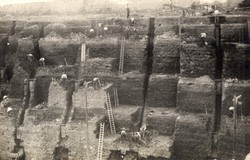
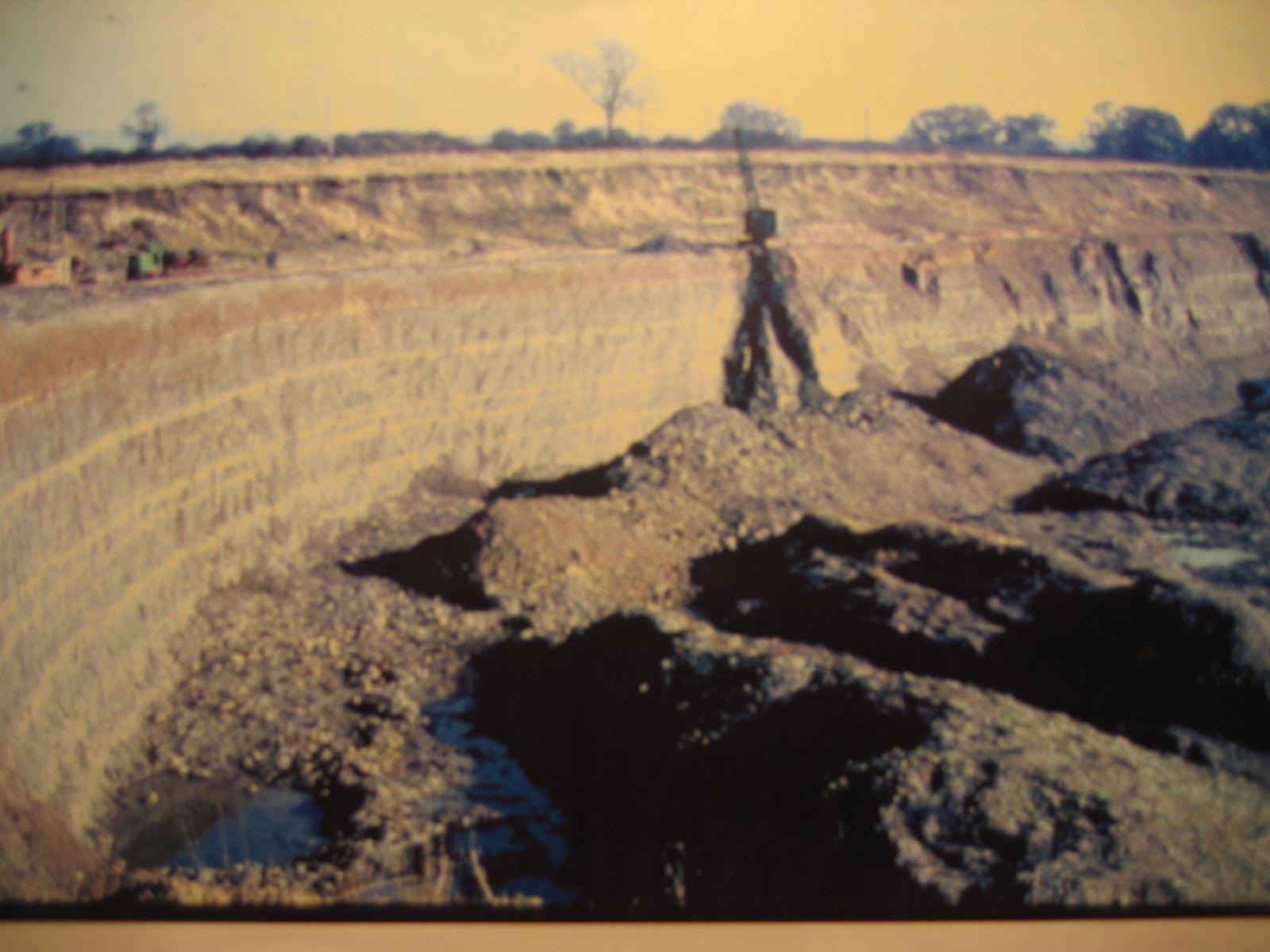
The broad low-lying vale towards the north of Buckinghamshire marks the outcrop of the Oxford Clay Formation. Exposure of this clay was once excellent, in the brick pits of the mid-northern part of the county (Calvert, Woodham, Newton Longville), which have ceased to be worked in recent decades. Where it is not covered by more recent ice-age deposits, it produces a sticky soil in which deep cracks open during dry summer weather.The Oxford Clay was deposited in a deepening sea around 160 million years ago. The Oxford Clay Formation was traditionally divided into three parts - Lower, Middle and Upper - which have now been re-named the Peterborough Member, Stewartby Member and Weymouth Member, respectively. The Peterborough Member is a shaly clay with a high fossil organic content. The Stewartby Member retains the shaliness, but is less organic-rich. At the top of this member, a condensed uppermost Middle Jurassic "Lamberti Limestone" bed was once well exposed at Woodham, where it was famed for comprising a greater proportion of fossil shell than matrix. The uppermost, Weymouth Member consists of more plastic, calcareous clay, with abundant pyritised fossils, particularly ammonites.
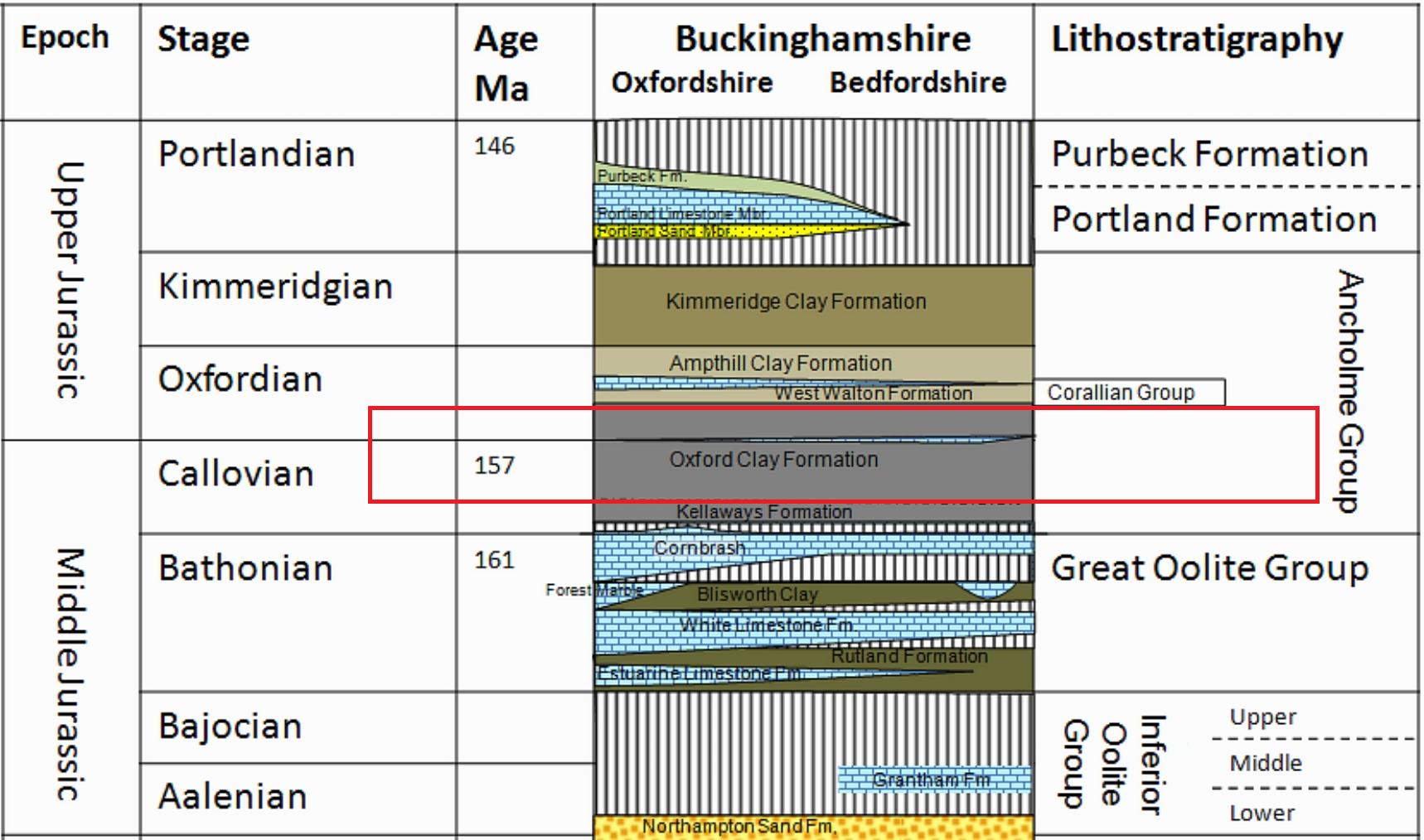
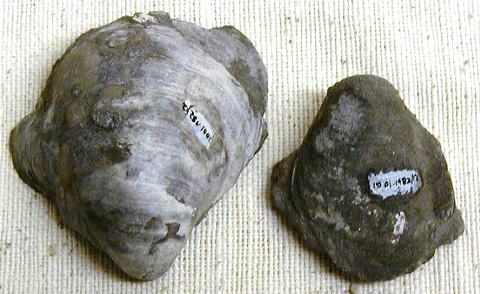
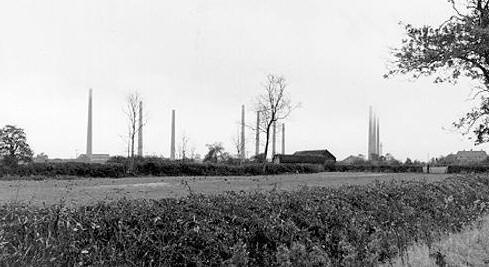
Diagram above: Stratigraphy of the Middle and Upper Jurassic in Buckinghamshire (Oxford Clay Formation highlighted).These units were all deposited on a deep marine shelf, well below the level of wave activity. In the warm nutrient-rich seawater, life was abundant and when it died and fell to the seafloor, it often encountered a muddy soup devoid of oxygen. Consequently, at some levels within the Oxford Clay Formation, sea-floor predation was minimal, decay was limited and articulated skeletons of fish and reptiles are preserved as fossils. As the seafloor for periods during Oxford Clay deposition was hostile to life, the fossil shells, particularly ammonites and belemnites, not surprisingly, were free-swimming (planktonic) well above the mud. Small bivalves (Bositra buchi) are also abundant, and similarly are believed to have occupied a planktonic existence during life, attached to floating debris. At the top of the Oxford Clay foodchain were reptiles such as marine crocodiles, plesiosaurs and ichthyosaurs. Evidence has recently emerged suggesting that these fed, at least in part, on the abundant contemporary ammonite and belemnite molluscs present. The distinctive shells of a large Oyster, Gryphaea, (also known as 'Devil's Toenail') often weather up into the soil. Oxford Clay was extensively dug for brickmaking in Buckinghamshire. The small pit at Woodham exploited the uppermost Stewartby Member and the basal Weymouth Member. This pit operated from about 1935 until the late 1960s, after which it was backfilled. The huge enterprise run as London Brick Company's Calvert Works produced 8 million bricks a week in its heyday. It used only Peterborough Member clay, which contains enough organic material to maintain temperature during the bricks' firing cycle, saving greatly on fuel costs. This business was terminated in 1991. 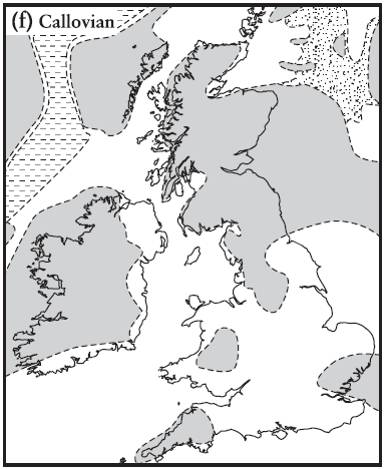
Oxford Clay Fossils
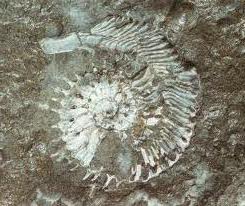 Kosmoceras is the most abundant Lower Oxford Clay ammonite. Each species shows dimorphism (probably
male/female). This specimen is adorned with lappets at its aperture, and is thought to be male.
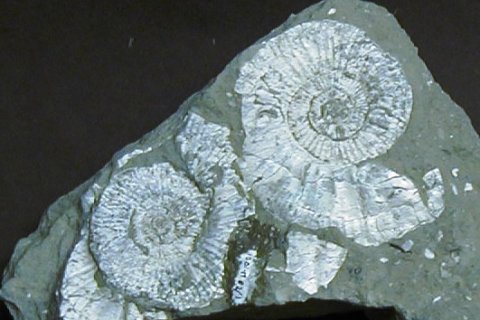 Binatisphinctes comptoni is extremely common in the thin cementstone bed bearing its name; the "Comptoni Bed".
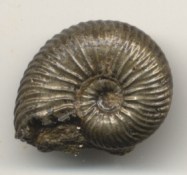 Above the Lower to Upper Oxford Clay boundary, Quenstedtoceras dominates the fauna across all NW Europe..
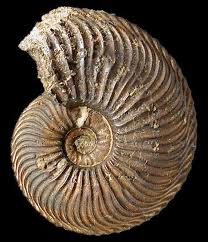 During deposition of the Upper Oxford Clay, Quenstedtoceras evolved into the genus Cardioceras, with a much sharper keel.
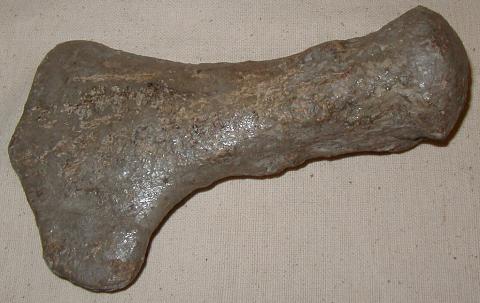
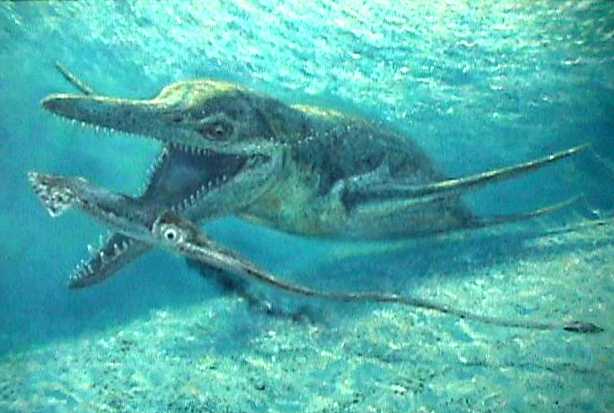
Oxford Clay Plesiosaur or Pliosaur limb bone, Belemnite rostrum and artist's reconstruction of their relationship 160 million years ago.
|