|
Bucks Geology GroupGault Clay
The Gault Clay Formation covered northern Europe during the Middle-Late Albian stage of the Early Cretaceous (around 105 to 95 million years ago). This was a time when the world was experiencing global warming, sea levels were rising rapidly, culminating with record high levels during the deposition of the Chalk. The base of the Gault Clay often directly overlies the eroded, unconformable surface of older sediments. In Buckinghamshire, borehole evidence shows that it sits directly on Upper to Middle Jurassic towards the south of the county. (Beneath London, the Gault Clay rests directly upon the old, Devonian, land surface. The Gault Clay is a grey clay, particularly fossiliferous near its base, but becoming more monotonous in its higher part. The sediment was probably derived from Jurassic Clay formations being eroded from low-lying surrounding land areas (such as the London Platform; the Armorican area - Devon, Cornwall; Northern England)Fossil shells are often preserved in their original material, albeit very fragile and crushed as the clay has compressed. Others attracted a phosphatic cementation shortly after burial. These are now preserved as hard, fully 3-dimensional casts which are very robust. Some concentrations of phosphatic fossil casts occur in discrete bands and represent a time of ocean deepening, and the subsequent period when the sediment did not reach this offshore area of the sea-floor.
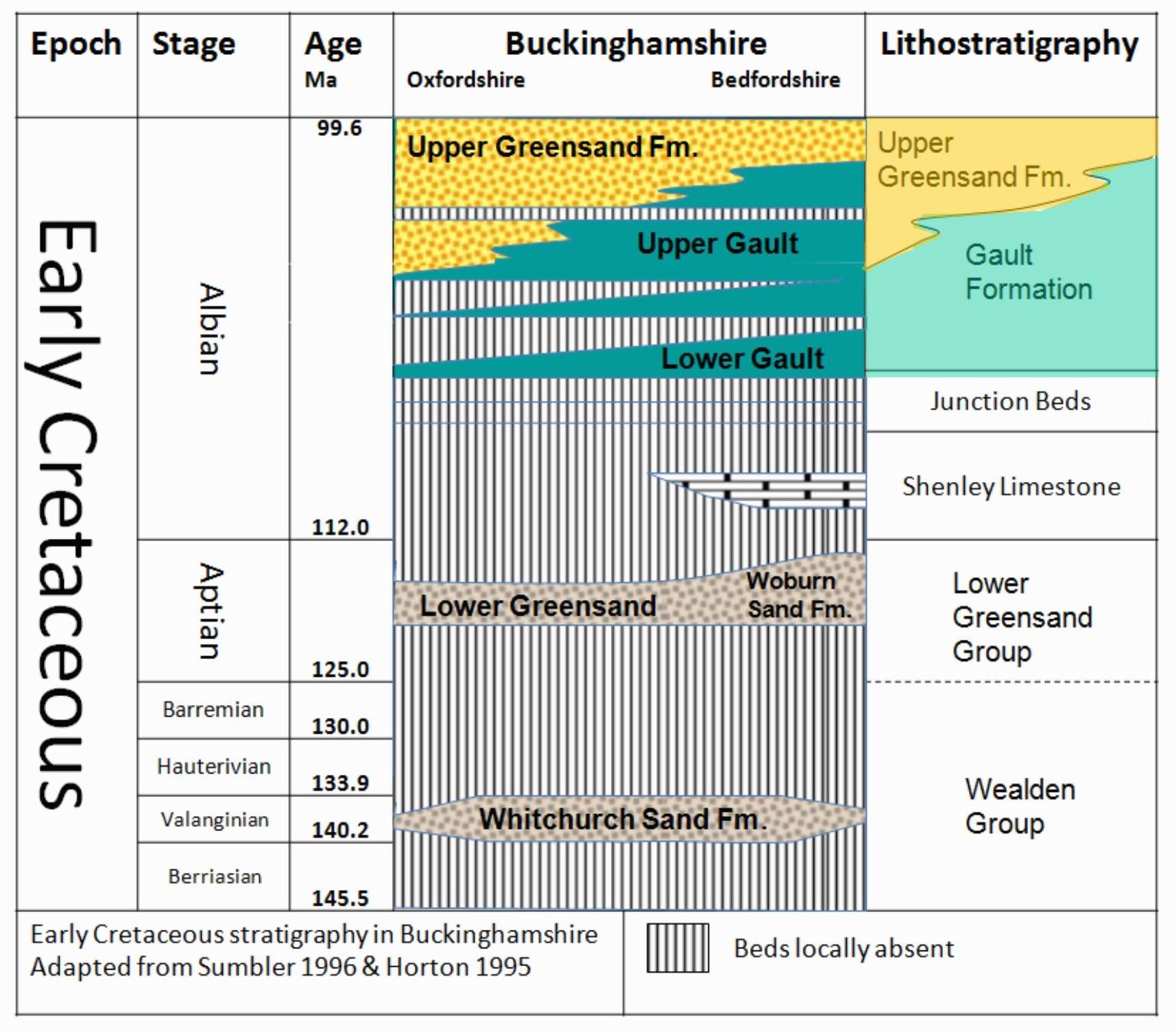
The Gault Formation of Buckinghamshire Stratigraphy
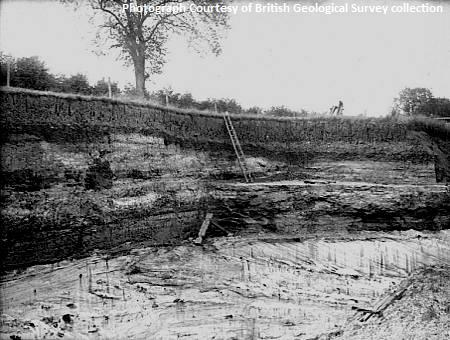
In the early 20th Century the Gault clay was worked for it's phosphatic pebbles of 'coprolite beds'. Hover cursor over photograph for label.
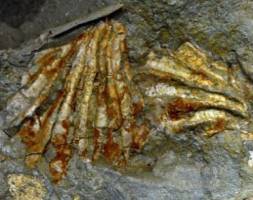
Below are a number of fossils which you can expect to find within the Gault Clay Formation. Hover cursor over photograph to enlarge.
.... 
Further reading suggestions: Horton, A., 1995. Geology of the country around the Thame. Memoir for geological map 237. Young, J.R., 2009. Fossils of the Gault Clay. The Palaeontological Association, London. Images used with permission: © Copyright Buckinghamshire County Museum (Licence No. 44)
|
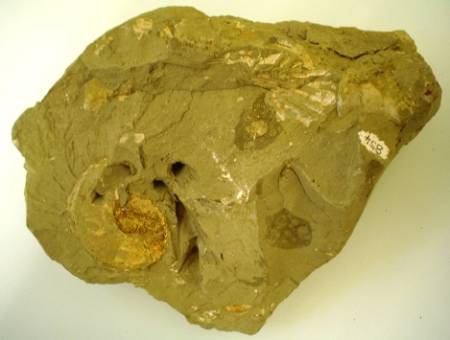
 Prohysteroceras (Goodhallites). Gault Clay ammonite with a bivalve, Birostrina sulcata, embedded in the centre. Bucks County Museum Collection -Specimen No. 1917.88.1. Found at Stoke Mandeville, Buckinghamshire.
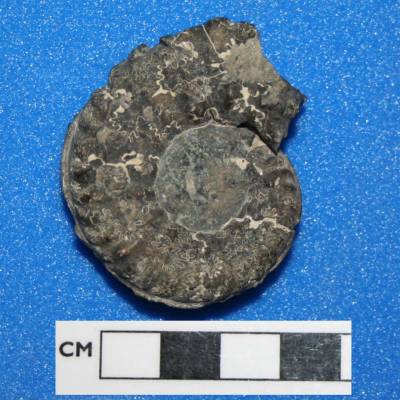 Mortoniceras devonense. Ammonite from the Gault Clay, Stoke Mandeville, Buckinghamsgire. Bucks County Museum - Specimen No. 1972.166.18
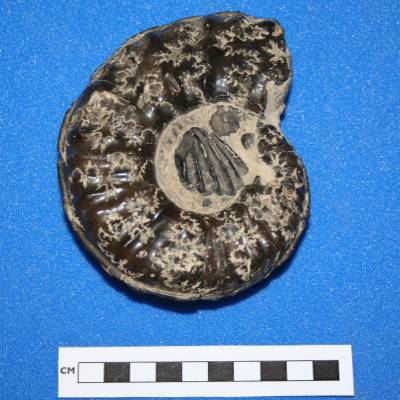
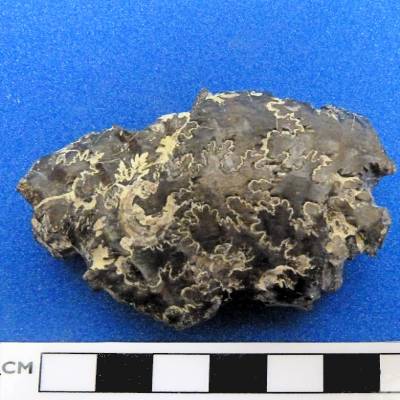 Prohysteroceras (Goodhallites). Ammonite. Bucks County Museum - Specimen No. 1968.149.2
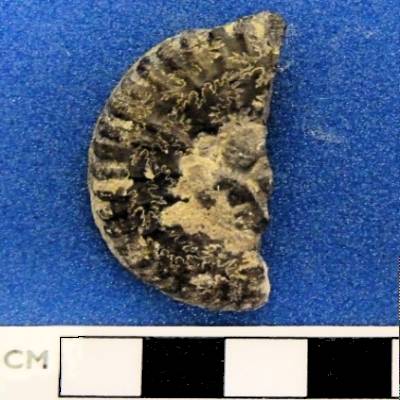 Prohysteroceras (Goodhallites). Ammonite. Bucks County Museum - Specimen No. 1968.149.3
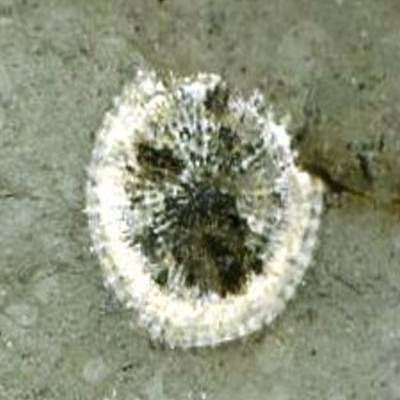 Solitary coral. Although generally preferring to grow free from mud, these solitary corals existed in the Gault sea.
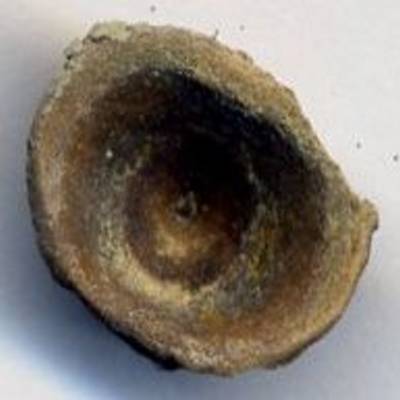 Fish teeth and bones, like this vertebra, are common, particularly in the more phosphate-rich layers.
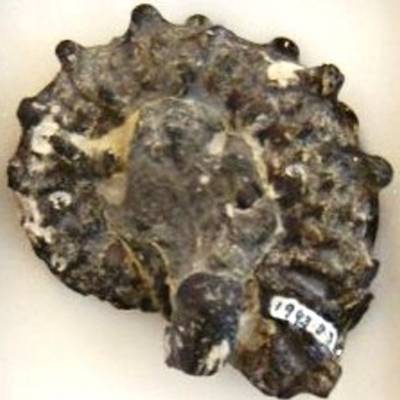 Gault Clay ammonite: preserved in phosphatic nodule. Bucks County Museum - Specimen No. 1993.2.3
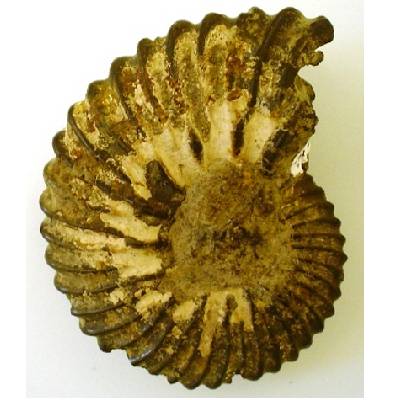 Gault Clay ammonite: Euhoplites sp. Bucks County Museum - Specimen No. XXX
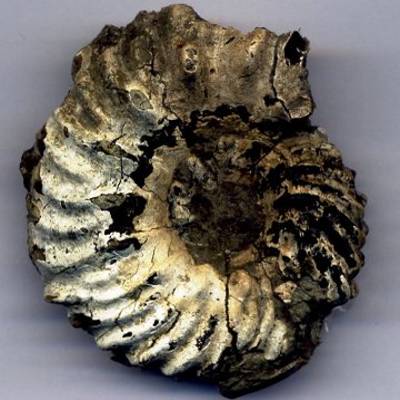 Ammonite from the Lower Gault Clay: Hoplites bonarelli The original white shell encloses a black, phosphatised clay internal cast.
 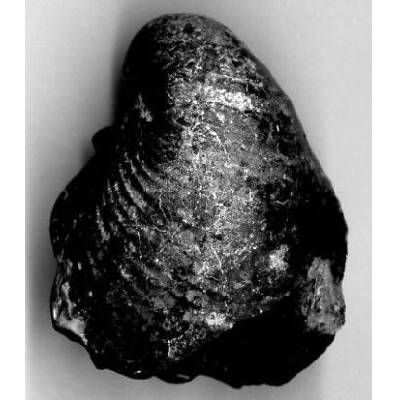 Bivalve: Birostrina concentricus, characteristic of the Lower Gault Clay
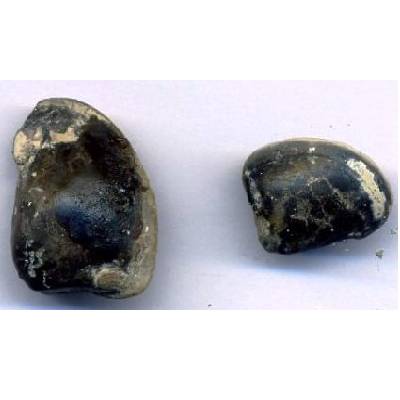 Nucula pectinata: Shallow-burrowing bivalve. Only the phosphatised internal cast remains
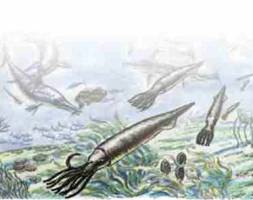
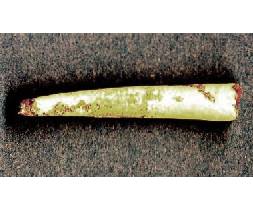
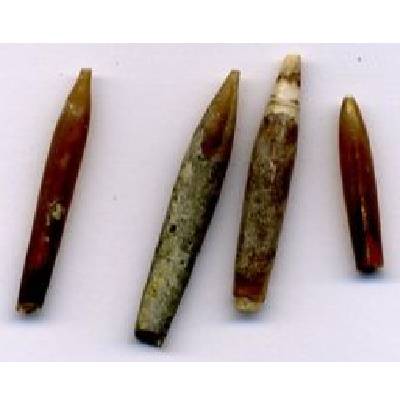 Belemnites: mainly Neohibolites, were abundant in the Gault sea. These remains are part of the internal
skeleton of squid like molluscs.
Belemnites: mainly Neohibolites, were abundant in the Gault sea. These remains are part of the internal
skeleton of squid like molluscs.